
Inside the Climbing Instructor Program Provider Refresher
CIP Provider Refresher
- What is a CIP Refresher and who participates?
- What is the purpose of bringing CIP Providers together for a refresher?
- What does a typical CIP Refresher look like, and what were the main areas of focus at this one?
- What skills, systems, or teaching techniques did Providers work through during the event?
- Were there any scenarios, exercises, or discussions from this refresher that stood out?
- How does what happens at a refresher ultimately translate back to the climbers participating in CIP programs?
- What equipment and materials are used during the refresher?
- What Sterling ropes and materials did you use during the refresher, and what were they being used for?
- How does having the right equipment support both the teaching and hands on practice that happen during a refresher?
- What do you hope Providers walk away with after attending a refresher?
- What’s one thing you wish more people understood about the work that happens behind the scenes to keep CIP instruction consistent and current?
--------------------------------------------------------------------------------------------------------------------------------------------------------------------------------
1. What is a CIP Refresher and who participates?
A CIP Refresher is a continuing professional development opportunity for AMGA Climbing Instructor Program Providers—the educators who teach and assess our Single Pitch Instructor (SPI) and Climbing Wall Instructor (CWI) programs.
Refreshers bring Providers together to stay current on program and curriculum updates, work through technical and instructional topics, and spend time learning from one another. The Gunks Refresher brought together a regional group of SPI Providers, which allowed us to focus specifically on the Single Pitch Instructor Program and recent changes to the SPI Course and Exam.
--------------------------------------------------------------------------------------------------------------------------------------------------------------------------------
2. What is the purpose of bringing CIP Providers together for a refresher?
One of the primary purposes is calibration. Our Providers are experienced educators working across the country in different climbing areas, organizations, and teaching environments. There should be room for individual teaching styles and regional considerations, but the underlying program standards need to remain consistent.
A refresher gives us dedicated time to look closely at those standards together. It also creates an important connection between the AMGA and our Provider team. Rather than simply sending out a curriculum update, we can discuss why something has changed, hear what Providers are experiencing in the field, and identify areas where the program or resources may need additional clarification.
--------------------------------------------------------------------------------------------------------------------------------------------------------------------------------
3. What does a typical CIP Refresher look like, and what were the main areas of focus at this one?
A refresher generally combines program updates and discussion with hands-on professional development.
At the Gunks, we spent time reviewing CIP and broader AMGA updates, Provider resources, and recent changes to the SPI Course and Exam. A major focus was the updated SPI Exam scenario—why it was introduced, how it is being incorporated into courses, how it should be administered during exams, and how we evaluate candidate performance.
We put those conversations into practice at the Peterskill cliffs. That combination is important. We can establish context and expectations in the morning and then go outside and see how they actually work in a real climbing environment.
--------------------------------------------------------------------------------------------------------------------------------------------------------------------------------
4. What skills, systems, or teaching techniques did Providers work through during the event?
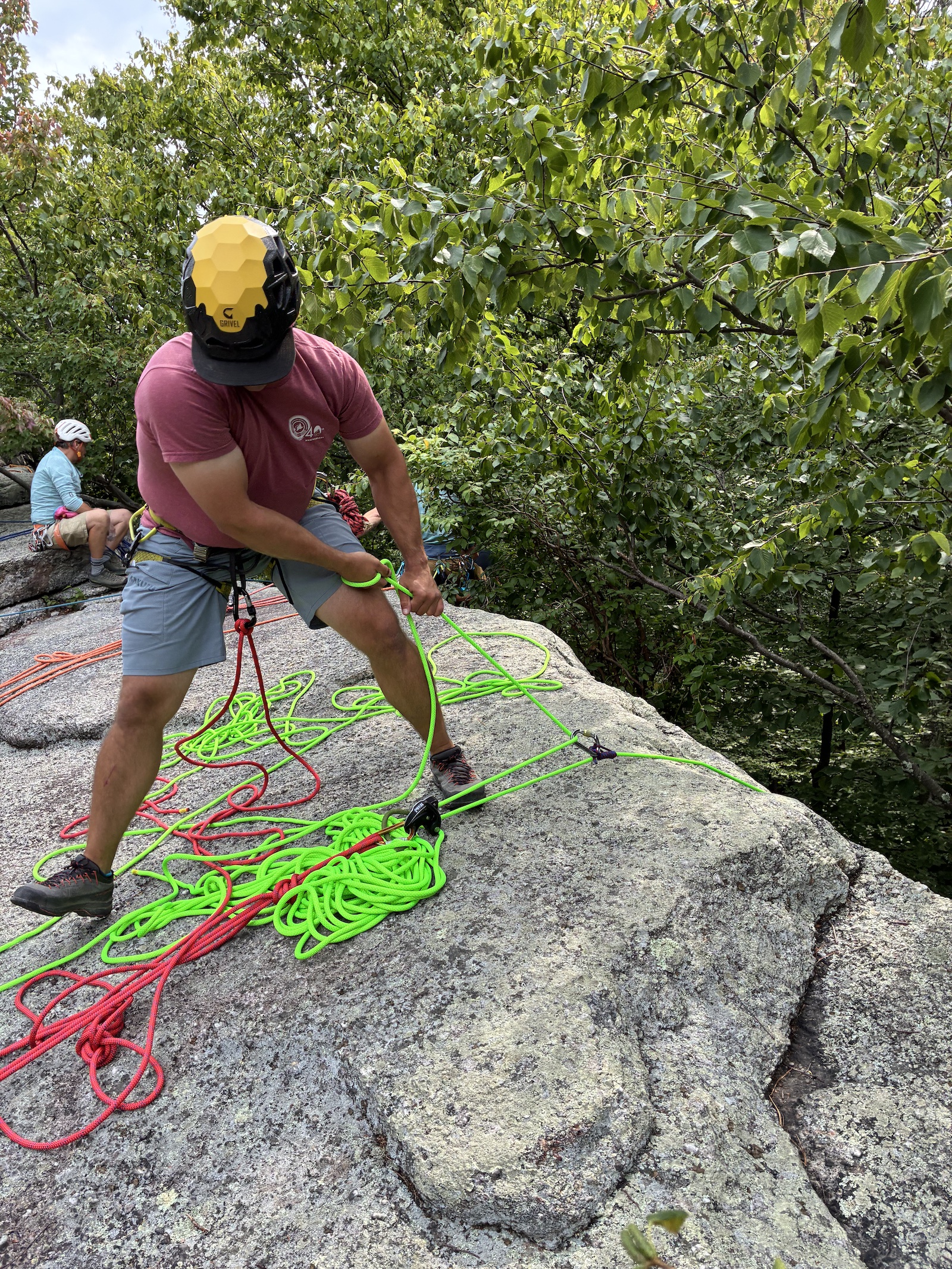
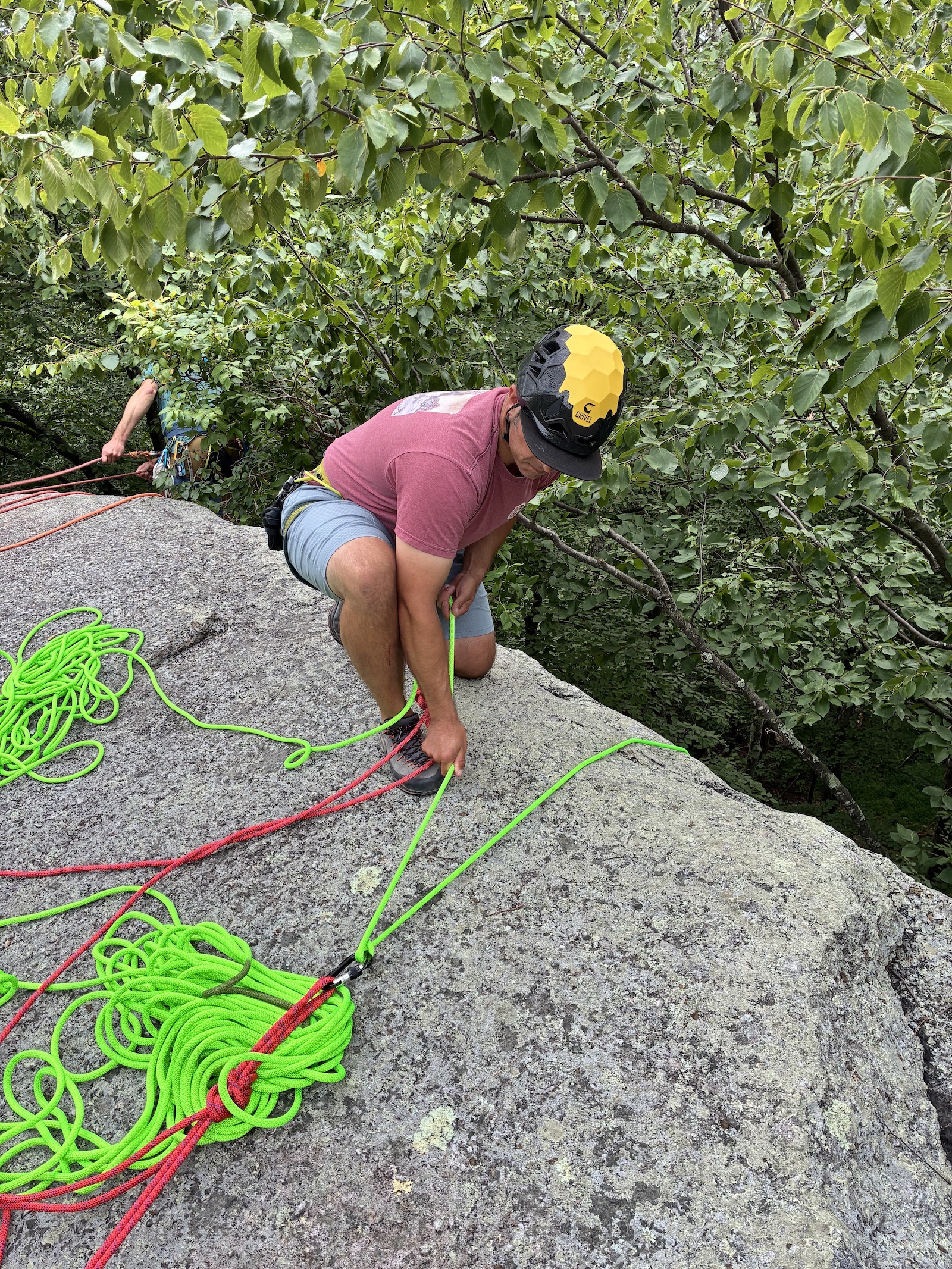
Much of the technical work centered around the systems contained within the SPI Exam scenario, including anchor systems, tethering, lowering, belayed rappels, assistance techniques, and managing the overall climbing system.
But we were looking beyond whether Providers could simply perform those skills. These are experienced instructors. The more interesting questions are how we teach those skills effectively, how we manage them with students, what good instructional technique looks like, and how we evaluate proficiency.
--------------------------------------------------------------------------------------------------------------------------------------------------------------------------------
5. Were there any scenarios, exercises, or discussions from this refresher that stood out?
The scoring discussions stood out to me because they generated some of the best conversations of the day.
We looked at candidate performances that intentionally weren't completely black and white. For example, what if someone performs the technical systems cleanly but takes longer than expected? What if a candidate makes an error, recognizes it, corrects it, and then successfully continues? At what point does an issue affect technical proficiency, efficiency, or risk management?
Those examples force us to get beyond simply asking whether a candidate completed the task. Providers have to look at the entire performance and apply the scoring criteria consistently. Those conversations are exactly where calibration becomes valuable.
--------------------------------------------------------------------------------------------------------------------------------------------------------------------------------
6. How does what happens at a refresher ultimately translate back to the climbers participating in CIP programs?
The biggest impact should be the quality of the student's experience.
A climber taking an SPI or CWI program should have clear expectations and receive a high-quality educational experience regardless of where they take their program or which Provider they work with. The Provider doesn't need to teach exactly like every other Provider, but students should be working toward the same core competencies and being evaluated against the same standards.
Refreshers can also help Providers become better educators. When an instructor comes away with a better teaching progression, a clearer way to explain a technical concept, or a more effective way to manage a group at the cliff, that directly benefits their students.
--------------------------------------------------------------------------------------------------------------------------------------------------------------------------------
7. What equipment and materials are used during the refresher?
For the hands-on portion, we use essentially the same technical equipment Providers and candidates use during an SPI program—ropes, harnesses, helmets, carabiners, slings, anchor materials, belay and rappel devices, and personal climbing equipment.
We pair that equipment with the educational resources behind the program, including the SPI Program Handbook, the SPI manual Rock Climbing: The Official AMGA Single Pitch Manual, the SPI Exam Scenario, scoring and evaluation materials, and other Provider resources.
Having both pieces together is important. We can look at what the written standard says and then immediately build the system, operate it, teach it, or evaluate it in the field.
--------------------------------------------------------------------------------------------------------------------------------------------------------------------------------
8. What Sterling ropes and materials did you use during the refresher, and what were they being used for?
We used Sterling ropes, and Hollow Blocks throughout the field portion while Providers worked through the SPI Exam scenario. The ropes were used for the same kinds of systems our Providers are teaching and evaluating during SPI programs, including belaying, lowering, rappelling, and other rope-management systems within the curriculum.
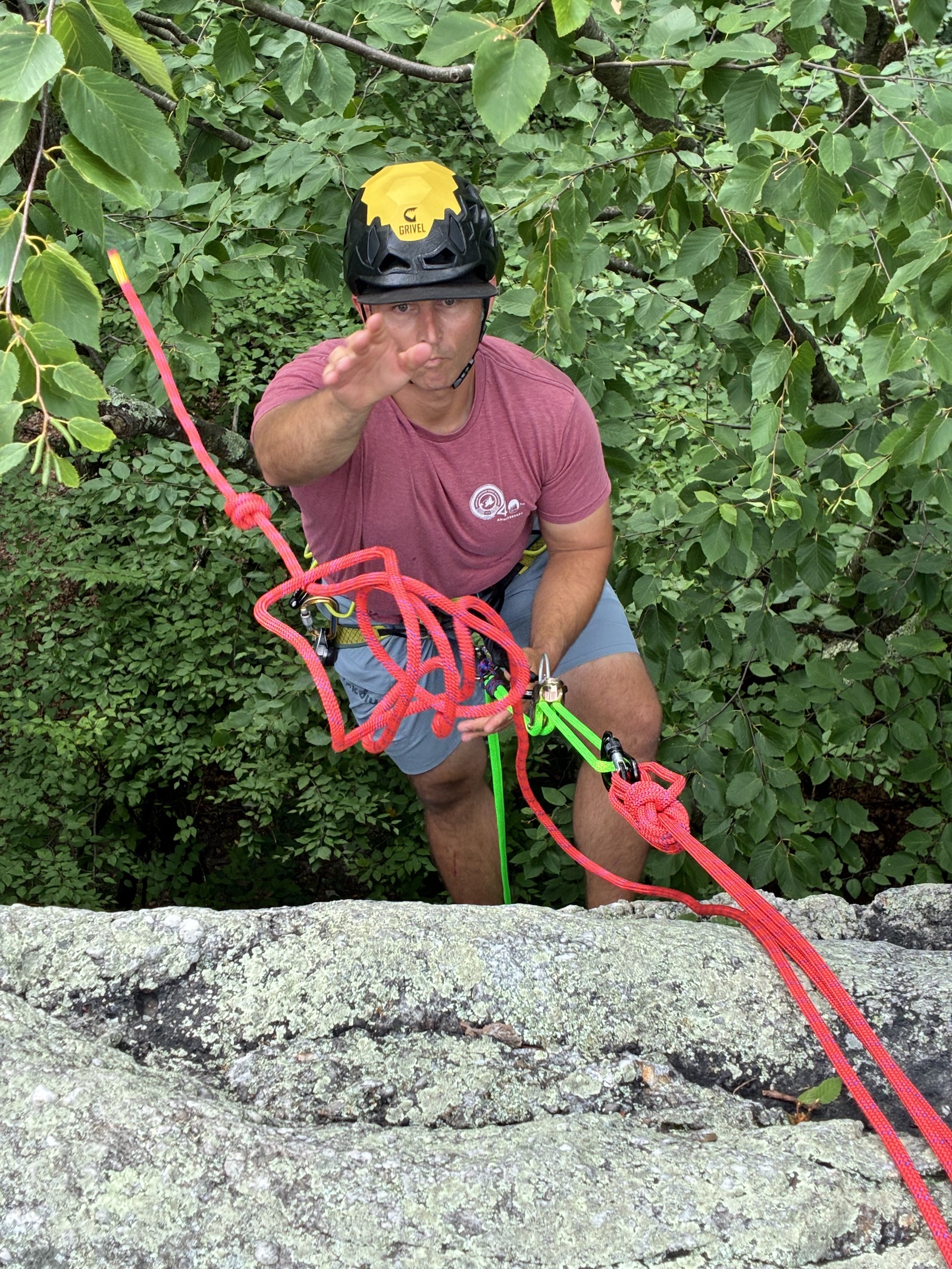
We used the Sterling Aeros 9.2mm 60m XEROS rope (green), the Sterling ⅜ 150’ Super Static2 (red), and the Sterling HollowBlock2 (tan).
That makes Sterling's support particularly relevant to this kind of professional development. These aren't demonstrations happening in isolation—the equipment is being incorporated into realistic systems in the terrain where Providers actually teach.
--------------------------------------------------------------------------------------------------------------------------------------------------------------------------------
9. How does having the right equipment support both the teaching and hands-on practice that happen during a refresher?
Technical education needs to be hands-on. We can talk about a system, look at a diagram, or discuss a scoring standard, but eventually we need to build it and use it.
Having appropriate, reliable equipment allows Providers to focus on the details that matter: how the system functions, how efficiently it can be managed, where potential problems arise, and how we communicate those concepts to students.
It also allows us to create a realistic learning environment. We're practicing with the same types of equipment and systems Providers will be working with when they return to their own courses and exams.
--------------------------------------------------------------------------------------------------------------------------------------------------------------------------------
10. What do you hope Providers walk away with after attending a refresher?
I hope they leave with greater clarity, confidence, and connection.
Clarity around current program expectations and the intent behind them. Confidence in how they're teaching and assessing those standards. And connection to a larger community of Providers who are dealing with many of the same questions and challenges.
I also hope everyone leaves with something practical. Maybe it's a teaching technique they picked up from another Provider, a clearer understanding of a scoring question, or a more efficient way of administering part of the program. A successful refresher should give Providers something they can put into practice on their next course or exam.
--------------------------------------------------------------------------------------------------------------------------------------------------------------------------------
11. What's one thing you wish more people understood about the work that happens behind the scenes to keep CIP instruction consistent and current?
I think people would be surprised by how much ongoing work happens behind the scenes of a national education program.
You can't simply publish a curriculum and consider the work finished. Techniques and equipment evolve. Providers encounter new situations. We receive feedback from students and instructors. Sometimes we discover that something that looks clear on paper can be interpreted differently when it's applied in the field.
Keeping the program current takes ongoing communication, curriculum development, Provider feedback, professional development, and opportunities like these refreshers where we can actually work together.
And consistency doesn't mean we want every Provider to look or sound the same. These are experienced educators, and we want them to bring their own experience, personality, and teaching style to their programs. The work behind the scenes is about making sure that underneath that individuality is a shared technical and instructional standard that students can trust.
Why You Should Use Social Media Marketing (+ Tips)